 Skip to content
Skip to main content
Skip to content
Skip to main contentThese types of mortgages allow homeowners 62 and older to convert a portion of their home’s equity into cash, a line of credit, or an annuity. Unlike a traditional mortgage, there’s no monthly payment to the lender; instead, the loan is repaid when the homeowner sells the house, moves out permanently, or passes away.
Pros:
No Monthly Payments: Homeowners can remain in their homes without worrying about mortgage payments.
Flexibility: Funds can be used for anything—medical expenses, home improvements, or even just supplementing retirement income.
Non-Recourse Feature: You’ll never owe more than the home is worth, protecting both the borrower and their heirs.
Cons:
High Fees: Reverse mortgages often come with higher closing costs and fees.
Impact on Government Benefits: The extra income could affect eligibility for Medicaid and other benefit programs.
Reduced Home Equity: Since you’re borrowing against your home’s value, there’ll be fewer assets to leave to your heirs.
A reverse mortgage is best suited for a specific group of people, primarily based on their financial needs, age, and circumstances. The most obvious group. Older homeowners with a lot of equity can turn this asset into cash without having to move or make monthly payments.
If you’re committed to staying in your current home for the long haul, a reverse mortgage can help you achieve that by giving you the financial flexibility to cover upkeep costs, healthcare, or other expenses.
Some opt for a line of credit option on a reverse mortgage, which they don’t draw upon unless there’s an emergency or unexpected cost. This provides a safety net without incurring debt until the funds are used.
Requirements | Explanation |
Minimum Age | The youngest borrower must be at least 62 years old. |
Credit History as a Factor | Unlike traditional mortgages where a high credit score is often a must, reverse mortgage lenders are generally more lenient. The focus is less on your credit score and more on your overall financial picture, including your ability to pay property taxes, insurance, and maintain the home. |
Down Payment | Only required for purchase and that depends on age. |
Financial Assessment | Lenders do conduct a financial assessment. This assessment examines your income, assets, credit history, and monthly living expenses. The aim is to gauge your financial capability to meet the obligations of the reverse mortgage. |
Counseling | Must attend a counseling session with a HUD-approved counselor to ensure you fully understand the terms, obligations, and potential consequences of a reverse mortgage. |
Loan Types | VA loans come in various terms and types, such as fixed-rate or adjustable-rate, which can also affect eligibility. |
Property Use and Type | The property must meet certain health and safety standards and pass an FHA appraisal. Reverse loans are only for primary residences, not investment properties or second homes. |
Funding Fee | Most VA loan borrowers are required to pay a funding fee. This is a one-time payment that can be financed as part of the loan or paid in cash at closing. The fee varies based on the type of borrower, the size of the down payment, and whether it’s your first VA loan or a subsequent one. Some are exempt from paying the fee, like veterans receiving VA disability compensation. |
Documentation | You may need to provide bank statements, W-2s, Govt. ID and Social Security. Information on other assets like retirement accounts and possibly tax returns. |
Is It Right for You?
A reverse mortgage is best suited for a specific group of people, primarily based on their financial needs, age, and circumstances. The most obvious group. Older homeowners with a lot of equity can turn this asset into cash without having to move or make monthly payments.
If you’re committed to staying in your current home for the long haul, a reverse mortgage can help you achieve that by giving you the financial flexibility to cover upkeep costs, healthcare, or other expenses.
Some opt for a line of credit option on a reverse mortgage, which they don’t draw upon unless there’s an emergency or unexpected cost. This provides a safety net without incurring debt until the funds are used.
A reverse mortgage is a loan for seniors age 62 and older. HECM reverse mortgage loans are insured by the Federal Housing Administration (FHA) and allow homeowners to convert their home equity into cash with no monthly mortgage payments.
We’re here to make the reverse mortgage process a whole lot easier, with tools and expertise that will help guide you along the way, starting with our FREE Reverse Mortgage Qualifier.
We’ll help you clearly see differences between reverse mortgage options, allowing you to choose the right one for you.
A reverse mortgage pays off your existing mortgage, should you have one, by allowing you access to the home equity you’ve worked so hard to build. Any money left after paying off your existing mortgage is available to use as you see fit.
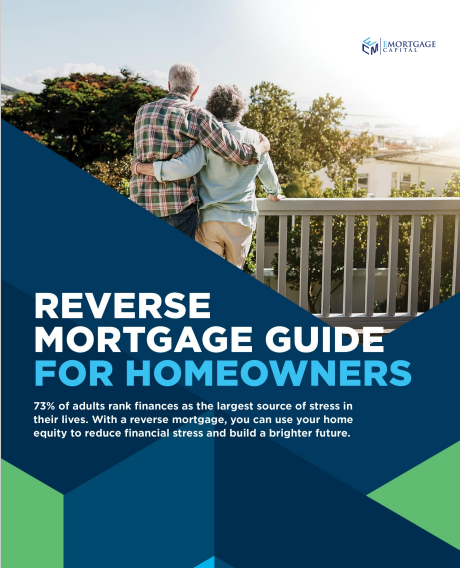
A HECM (Home Equity Conversion Mortgage) reverse mortgage is a specialized loan designed for homeowners aged 62 and older. While not all reverse mortgages are HECMs, all HECMs are reverse mortgages—the key difference being that HECMs are federally insured and regulated by HUD (the U.S. Department of Housing and Urban Development).
HECMs allow you to convert a portion of your home’s equity into cash. You can access these funds in multiple ways:
Unlike traditional mortgages, a HECM does not require monthly mortgage payments. You can even use it to purchase a new home, provided you follow the loan terms.
To maintain the loan, borrowers must:
Failure to meet these obligations can result in the loan becoming due sooner than anticipated.
One of the most significant advantages of a HECM is that the loan does not need to be repaid until the home is sold or the last surviving borrower or qualified non-borrowing spouse no longer lives there. This makes HECMs very different from a standard home equity loan or HELOC, where repayments typically start immediately.
HECM reverse mortgages are ideal for older homeowners who want to access home equity without monthly payments. They can provide financial flexibility in retirement, but borrowers must stay on top of property obligations to avoid early repayment. It’s a powerful tool for income supplementation, home purchases, or other financial goals in later life.
A HECM (Home Equity Conversion Mortgage) reverse mortgage allows homeowners aged 62 and older to access their home equity without making monthly mortgage payments. Here’s a step-by-step breakdown of how it works:
The amount you can borrow depends primarily on two factors:
Before approval, lenders perform a financial review to ensure you can manage ongoing costs like property taxes, homeowners insurance, and maintenance. This step helps protect both you and the lender from future financial strain.
You must complete a session with a HUD-approved housing counselor. This counseling ensures you fully understand the reverse mortgage process, including the costs, responsibilities, and options for repayment.
If you have an existing mortgage, the reverse mortgage funds are first used to pay it off. Any remaining proceeds are then available for your use.
HECMs offer flexible ways to receive your cash:
Tip: If you default on obligations or the loan matures, any growth in your line of credit may disappear.
To keep the loan in good standing, you must maintain your home and stay current on:
Failing to meet these obligations can trigger repayment of the loan.
A HECM reverse mortgage can provide financial flexibility, peace of mind, and the ability to supplement retirement income—as long as you stay on top of your property responsibilities.
To qualify for a HECM (Home Equity Conversion Mortgage) reverse mortgage, there are several key requirements you must meet:
Meeting the eligibility criteria is just the first step. FAR’s Reverse Mortgage Specialists can help you:
To qualify for a HECM (Home Equity Conversion Mortgage) reverse mortgage, you need to have a meaningful amount of equity in your home. While there isn’t a strict minimum required by law, having sufficient equity ensures that the loan will provide the funds you need.
Experts often recommend having at least 50% equity in your home before considering a reverse mortgage. Why? Because the reverse mortgage proceeds must first cover your existing mortgage balance. If your equity is too low, the funds may not fully pay off your current loan, limiting the amount left for additional use.
The amount you can borrow with a HECM (Home Equity Conversion Mortgage) reverse mortgage varies—there’s no one-size-fits-all answer. Several factors influence your borrowing limit:
Because so many factors affect your potential loan amount, the best way to know exactly how much you can receive is to speak with a Reverse Mortgage Specialist. Finance of America Reverse LLC (FAR) offers no-obligation quotes tailored to your unique situation, giving you a clear picture of your options.
With a HECM (Home Equity Conversion Mortgage) reverse mortgage, you have flexible options for accessing your funds. You can choose the method that best fits your financial goals:
Even though a HECM (Home Equity Conversion Mortgage) reverse mortgage doesn’t require monthly mortgage payments, there are important responsibilities you must meet to keep the loan in good standing.
You are responsible for covering all ongoing property costs, including:
Failing to pay these costs can trigger early repayment of the loan.
If any of the above requirements are neglected:
No—the bank does not take ownership of your home. With a HECM (Home Equity Conversion Mortgage) reverse mortgage, you remain the legal owner of your property, just like with a standard mortgage.
To keep your reverse mortgage in good standing, you must:
As long as you meet these obligations, your ownership rights remain intact.
While a HECM (Home Equity Conversion Mortgage) reverse mortgage provides access to your home equity without monthly mortgage payments, there are several costs to be aware of:
These are typically paid at closing or can be rolled into the loan:
One of the benefits of a HECM reverse mortgage is that most upfront costs can be financed into the loan itself, reducing the need for large out-of-pocket payments.
The total costs can vary depending on your home, loan size, and chosen options. A Reverse Mortgage Specialist from Finance of America Reverse LLC (FAR) can provide a detailed, no-obligation breakdown tailored to your situation.
With a HECM (Home Equity Conversion Mortgage) reverse mortgage, you are not required to make monthly principal or interest payments while living in your home as your primary residence.
The loan becomes due and payable in the following situations:
A HECM (Home Equity Conversion Mortgage) reverse mortgage can be a smart way to maintain your lifestyle in retirement. However, it’s understandable to wonder how it might affect your heirs.
A reverse mortgage does not automatically erase your inheritance. While it uses a portion of your home equity during your lifetime, your heirs can still inherit any remaining equity after the loan is repaid. Open communication and careful planning can help ensure your reverse mortgage supports your retirement without unintended surprises for your family.
Yes! A HECM (Home Equity Conversion Mortgage) for Purchase allows homeowners aged 62 and older to buy a new home using a reverse mortgage. This program can help you relocate, downsize, or upgrade your home in retirement without the burden of monthly mortgage payments.