 Skip to content



Most homeowners I talk to are not paying attention to the luxury market.
They assume that is someone else’s conversation.
But here is what I have learned in 34 years of navigating real estate, mortgages, and finances alongside couples who are trying to build something real:
A lot of people are sitting on more than they realize.
You may already own a luxury-tier home without realizing it. Luxury is not one national price point—it is generally defined relative to the top of your local market.
First, let me ask you something.
What is considered a luxury home in your zip code?
Most people cannot answer that.
Some are sitting on a home that qualifies and have no idea. Others assume they are in the luxury tier when they are not quite there yet.
Here is the definition: Redfin generally defines luxury homes as properties in the top 5% of their metro area’s price range. That number looks completely different depending on where you live, which is why your local pricing and market conditions matter more than a national label.
So before you read anything else, I want you to actually answer that question.
You can look it up right now. A quick Google search—“luxury home price threshold in [your city]”—will get you a ballpark. Or pull up an AI tool and ask: “What is the top 5% home price in [your zip code]?” It takes two minutes.
And the answer might change how you think about what I am about to share.
The luxury market is moving—while much of the rest is slowing.
Here is what the data shows right now.
According to Redfin’s June 2026 luxury-market report, non-luxury home sale prices were up about 1.5% year over year. That is the kind of modest growth most people are hearing about in the broader housing headlines.
But luxury homes? The median luxury sale price was up 4.7% over the same period.
+1.5% year over year
Redfin reported comparatively modest price growth for non-luxury homes during the three months ending May 31, 2026.
+4.7% year over year
Luxury home prices rose more than three times faster during the same period.
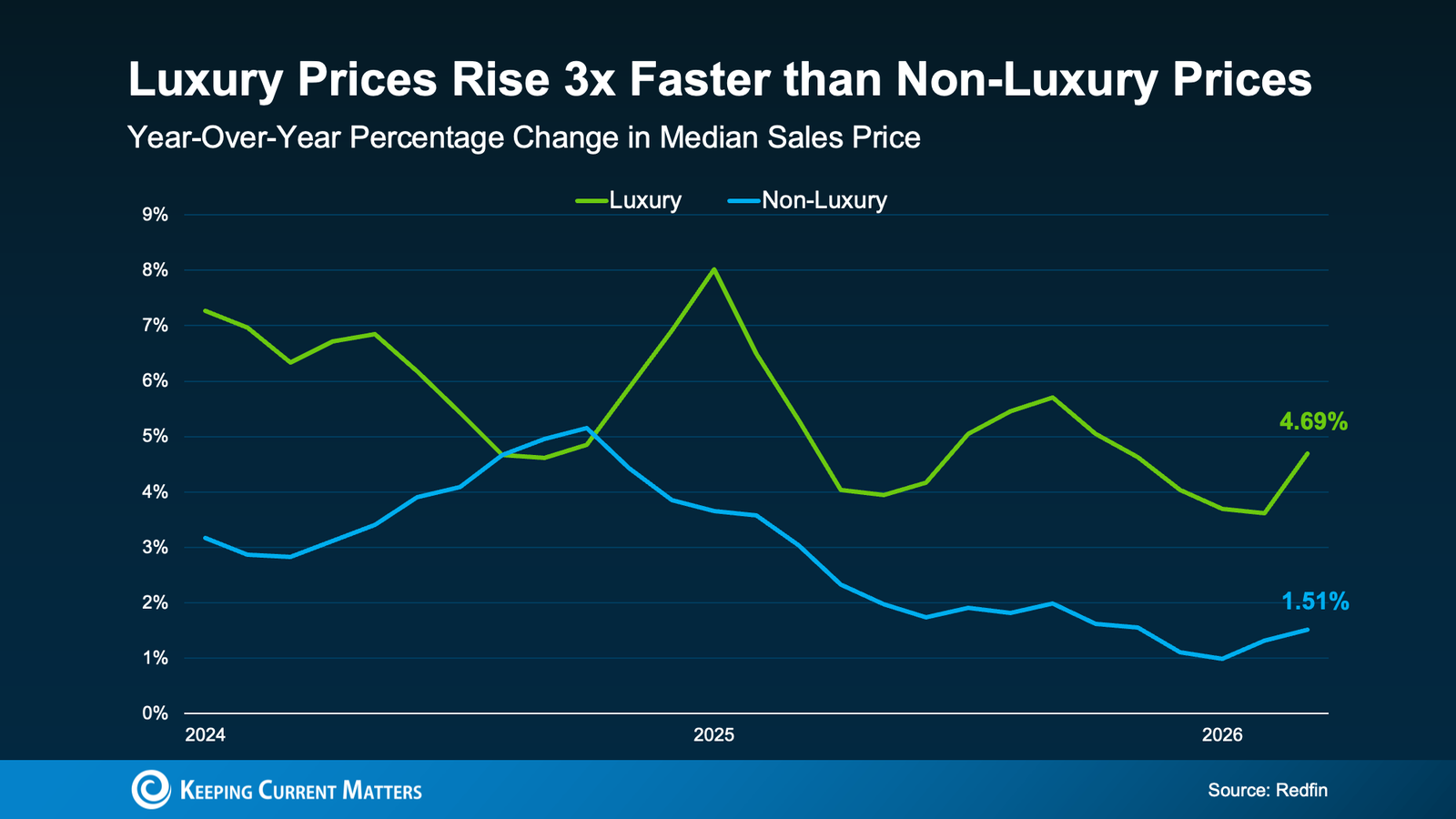
That is more than three times the growth rate—during a period when many sellers are being told to keep their expectations in check.
Lawrence Yun, Chief Economist at the National Association of Realtors, has also pointed to stronger activity at the upper end of the market, including an 18% year-over-year increase in sales of homes priced at $1 million or more.
And Redfin reported a national median of 49 days on market for luxury homes during the three months ending May 2026.
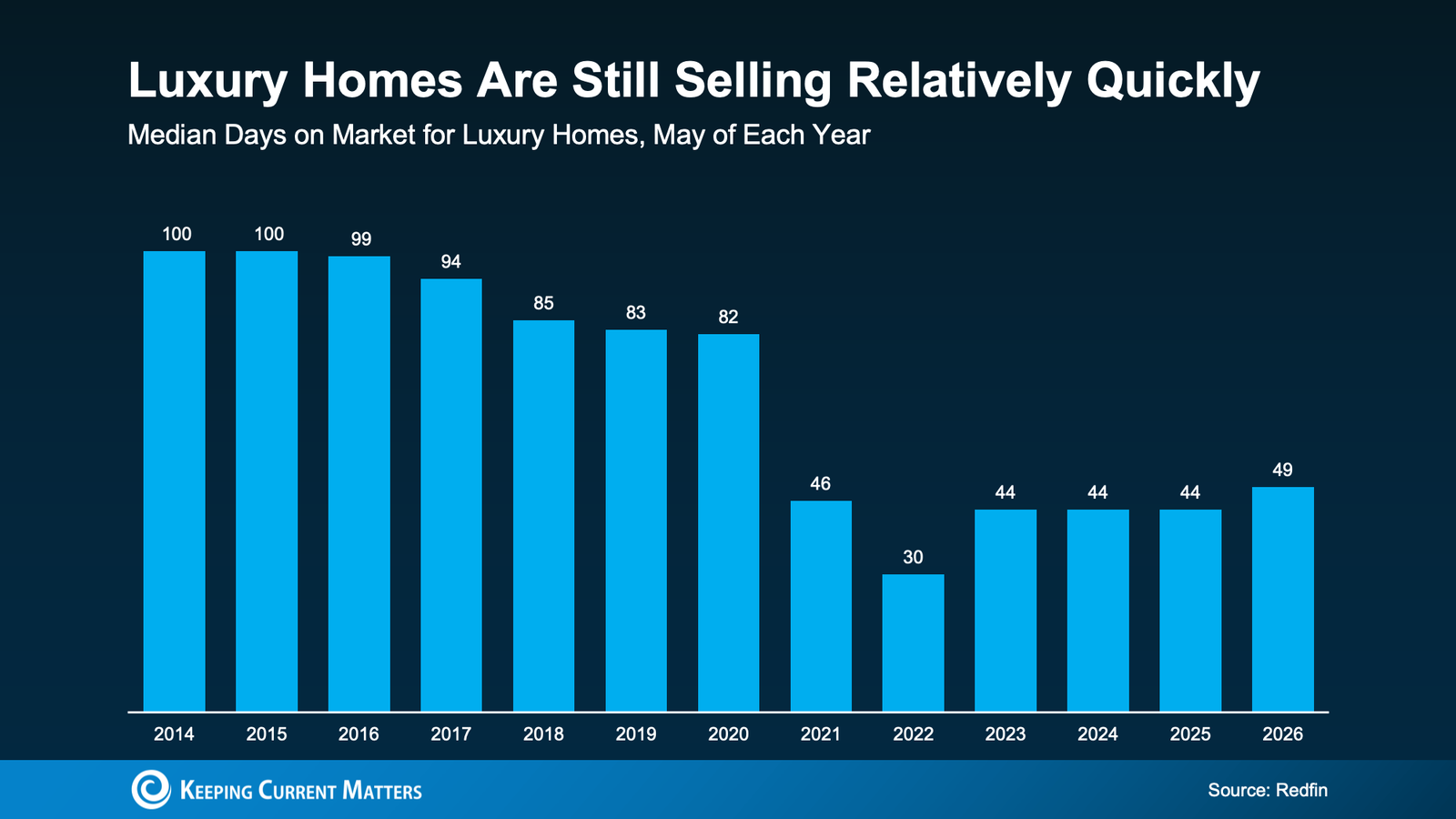
This is not noise. This is a real window—for the right seller, at the right moment.
“The opportunity is not simply that luxury prices are higher. It is that the top end of the market is behaving differently from the rest.”
Pat Collins
Why is this happening?
The broader market has been dealing with affordability pressure and higher mortgage rates.
Rates went up. Buyers in the mid-range got stretched. A lot of them stepped back and stayed on the sidelines.
High-end buyers tend to be less sensitive to that pressure. They may have more assets, more liquidity, and more flexibility to keep moving. And when there are fewer sellers competing for buyer attention, a well-positioned home has a better opportunity to stand out.
Motivated buyers. Rising luxury prices. A market segment that is still moving. Those conditions do not align all the time.
Motivated buyers. Rising prices. Faster movement.
Those three things do not align often. Right now, they are showing up together at the top of the market.
What this means for your family’s wealth.
My wife and I have navigated over three decades of decisions exactly like this one together.
And the one thing I know is this:
The couples who build real wealth are not always the ones who made the perfect move at the perfect time.
They are the ones who recognized the window—and made a decision together, with clear eyes, instead of letting it pass by default.
If your home is in the luxury tier for your area, this may be one of those windows.
That does not mean you need to rush. It means you need to understand your pricing, timing, and position, so the decision you make is intentional—not made in the dark and not made under pressure.
Is your home already in the luxury tier?
Let’s look at the price range in your local market, your estimated home value, your equity, and what selling now could mean for your next move.
Talk With PatStart here.
You do not need to make a decision today. You do need to know what position you are in.
Search for the top 5% home-price range in your city, metro area, or zip code. Treat it as a starting point because local definitions can vary.
Look at recent comparable sales, current competition, condition, location, and the features that make your property difficult to replace.
If you are in or near the top 5% for your area, talk with a local real estate professional about demand, pricing, days on market, and what buyers are doing now.
If you are in the top 5% for your area, the conversation with a local real estate professional is worth having now—while the luxury market is showing strength.
And if you are not sure where to start, that is exactly what I am here for.
Pat Collins
Financial Coach | Mortgage Professional | Realtor
34 Years of Marriage and Real Estate—I have been on both sides of every table.
Educational disclosure: This article is for general educational purposes only. Housing-market data changes over time and can vary significantly by metro area, neighborhood, property type, and price range. National luxury-market trends do not guarantee a particular selling price, offer, or timeline for an individual property. Real estate, mortgage, tax, legal, and financial decisions should be evaluated based on your specific circumstances. Market figures referenced above include Redfin data for the three months ending May 31, 2026.