 Skip to content



Most homeowners picture spring when they think about selling. The grass is green, the flowers are blooming, and buyers seem to be everywhere. But more activity does not always mean a better opportunity for your house.
Winter can create a different kind of advantage. There are often fewer homes competing for attention, and the buyers who are still shopping usually have a real reason to move. When your home is priced correctly, presented well, and supported by a clear plan, the quieter season may work in your favor.
You do not need the busiest market. You need the right buyers to notice your home, understand its value, and feel confident enough to make a strong offer.
Winter is not a dead market. It is a different market.
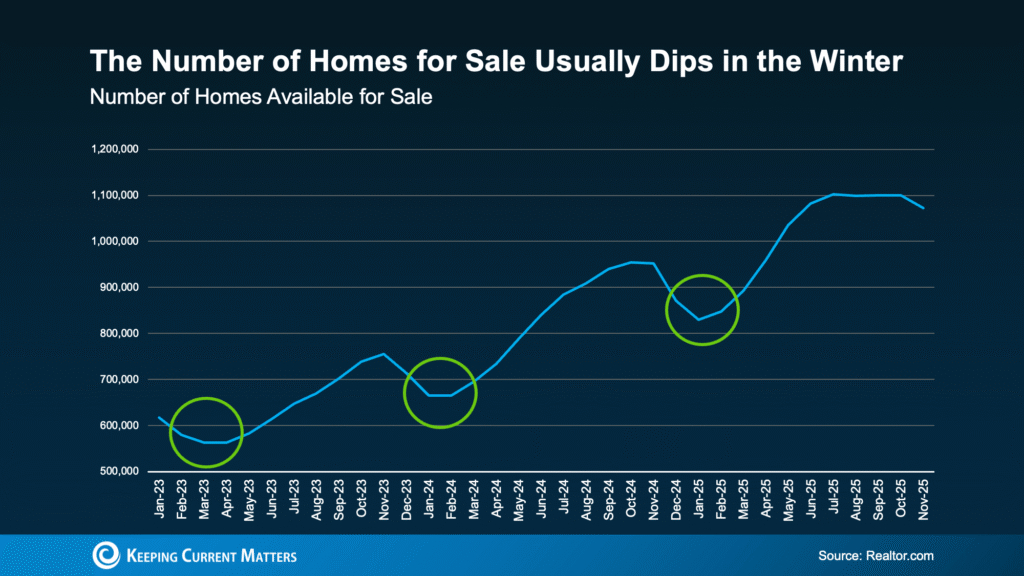
Real estate activity typically slows during the winter. Some homeowners postpone listing because of the holidays, travel, weather, school schedules, or the belief that spring is always better.
That slowdown can feel like a disadvantage. But it also removes some of the noise.
In spring, buyers may have more homes to choose from. They can compare your kitchen, yard, price, upgrades, and location against a growing list of new properties. In winter, the selection is often smaller. A home that fits a buyer’s needs may receive more focused attention simply because there are fewer similar choices available.
“The goal is not to list when everyone else lists. The goal is to list when your home can compete well and the timing supports your next move.”
Pat Collins
The winter market will not be identical in every city, neighborhood, or price range. That is why the decision should start with local inventory, recent comparable sales, current days on market, and the number of competing homes buyers can see right now.
Less competition can give your home more visibility.
Imagine two open houses.
At the first, your home is one of twelve similar listings that came on the market the same week. At the second, your home is one of three realistic options in the area and price range.
Which one has the better chance of being remembered?
More buyers—and more sellers
Higher traffic may come with more competing listings, more side-by-side comparisons, and greater pressure to make your home look like the strongest value.
Less noise around your listing
When inventory is thinner, a properly priced and well-presented home may receive a larger share of buyer attention.
Visibility does not guarantee an offer, and fewer listings do not excuse poor preparation. Buyers still compare condition, location, payment, and price. But when your home is competing against fewer alternatives, the work you put into presentation can have more impact.
This is especially important if your home has a feature that is hard to replace: a desirable school district, a flexible floor plan, a large lot, a home office, a single-story layout, a remodeled kitchen, or a price point with limited inventory.
Winter buyers often have a reason to make a decision.
Some spring buyers are exploring. They may visit open houses for months before deciding whether they are ready.
Winter buyers are often working with a more immediate timeline. Their lease may be ending. A job transfer may be starting. Their family may need more space. They may be relocating, separating households, completing a sale, or trying to move before the next school term.
That does not mean every winter buyer will move quickly or pay any price. It means the buyers who stay active during a slower season are more likely to have a specific problem they are trying to solve.
A motivated buyer is not automatically a desperate buyer. It is usually a buyer with a defined goal, a real timeline, and a stronger reason to act when the right home appears.
For a seller, that can lead to more focused showings, clearer feedback, and quicker decisions. It can also reduce the number of casual visitors who like the house but are nowhere near ready to write an offer.
Winter will not sell the home for you. Preparation still matters.
The season may give you an opening. Your pricing and preparation determine whether you take advantage of it.
Do not price based on what you hope spring buyers might pay. Review current competition, recent sales, condition, and the payment buyers will face at your price.
Open the blinds, replace dim bulbs, remove heavy clutter, and make the home feel bright. Winter buyers should walk in and feel comfortable—not closed in.
Keep the entry, driveway, walkway, porch, and landscaping neat. The exterior still sets the tone even when the yard is not at its seasonal best.
Strong photography, accurate room descriptions, a clear floor plan, and thoughtful online marketing matter even more when buyers begin their search from home.
Before listing, understand your estimated proceeds, moving costs, next-home payment, financing options, and whether you need the sale to close before you buy.
A winter listing also needs a practical showing plan. Holiday schedules, shorter daylight hours, travel, rain, snow, and family events can affect access. The easier the home is to show, the more opportunities buyers have to see it.
Do not overlook the next-home strategy
Selling is only half of the decision if you also plan to buy.
You need to know how much equity may be available after closing, whether you can qualify before the current home sells, how a temporary housing gap would affect you, and what payment you are comfortable carrying on the next property.
A strong offer on your home is helpful. A strong offer combined with a clear plan for what happens next is better.
Know the numbers before the “For Sale” sign goes up.
I can help you think through estimated proceeds, the next-home payment, available financing strategies, and the timing between selling and buying.
Talk With PatHow do you know whether winter is right for you?
Winter may be worth considering when your home has limited competition, your local market still has active buyers, the property shows well during the season, and you have a personal or financial reason to move.
Waiting may make more sense when the home needs repairs you cannot complete yet, seasonal weather makes the property difficult to access or present, your next-home plan is unclear, or local demand is unusually weak.
Ask these questions before deciding:
- How many homes like mine are currently for sale?
- How long are similar homes taking to sell?
- Are sellers receiving price reductions, credits, or multiple offers?
- What would my estimated net proceeds look like at a realistic selling price?
- Where will I live next, and how will that purchase be financed?
- Would waiting improve the property—or simply add more competing listings?
The answers are more useful than a general rule about the “best” month to sell.
Bottom line
Spring may bring more buyers. It may also bring more sellers.
Winter can give a prepared homeowner a quieter lane: fewer competing listings, more attention from serious buyers, and an opportunity to move before the seasonal rush.
That does not mean you should list simply because the calendar says winter. It means you should not automatically wait for spring without comparing the tradeoffs.
Look at your local market. Prepare the house. Price it correctly. Understand your proceeds and your next-home strategy.
Sometimes the season everyone overlooks is the season that gives you the clearest advantage.
Educational disclosure: This article is for general educational purposes. Real estate conditions, property values, buyer demand, marketing results, loan options, and closing timelines vary by location and individual circumstances. Nothing here is a guarantee that a property will sell, receive a particular offer, or qualify for specific financing. Consult qualified real estate, mortgage, tax, legal, and financial professionals regarding your situation.