 Skip to content

If you are working toward buying a home, I already know where your eyes have been: mortgage rates, home prices, and maybe the down payment number.
There is a fourth number most couples never look at until it lands on their desk: homeowners insurance.
I want to walk you through what is actually happening with it—and why homeowners insurance belongs in your plan today, not after you close.
Your insurance premium is part of the real housing payment. Price it before the offer so you can confirm the home still fits your monthly budget, mortgage qualification, and cash-to-close plan.
First, what is actually happening.
Insurance has always been part of owning a home.
But over the last few years, it stopped being a small line item and started becoming a real expense for many households.
According to the Pew Research Center, 71% of U.S. homeowners say their insurance costs have gone up over the past few years. Forty-two percent say those costs have gone up a lot.
71% say their costs went up
Nearly three out of every four homeowners surveyed said their homeowners insurance became more expensive.
42% say costs rose a lot
This is not a handful of people complaining. It is a broad affordability issue homeowners and buyers need to plan around.
That is why an old estimate, a national average, or the premium paid by the current owner may not be enough to build your budget.
Here is the part most people miss.
Premiums are still rising. I am not going to tell you otherwise.
But the pace is changing.
A 2026 report from Rate Insurance, based on more than 265,000 policy records, found that 2025 marked the first meaningful slowdown after several years of sharp increases. Average premiums rose 9.16% in 2025, compared with increases of nearly 20% in both 2023 and 2024.
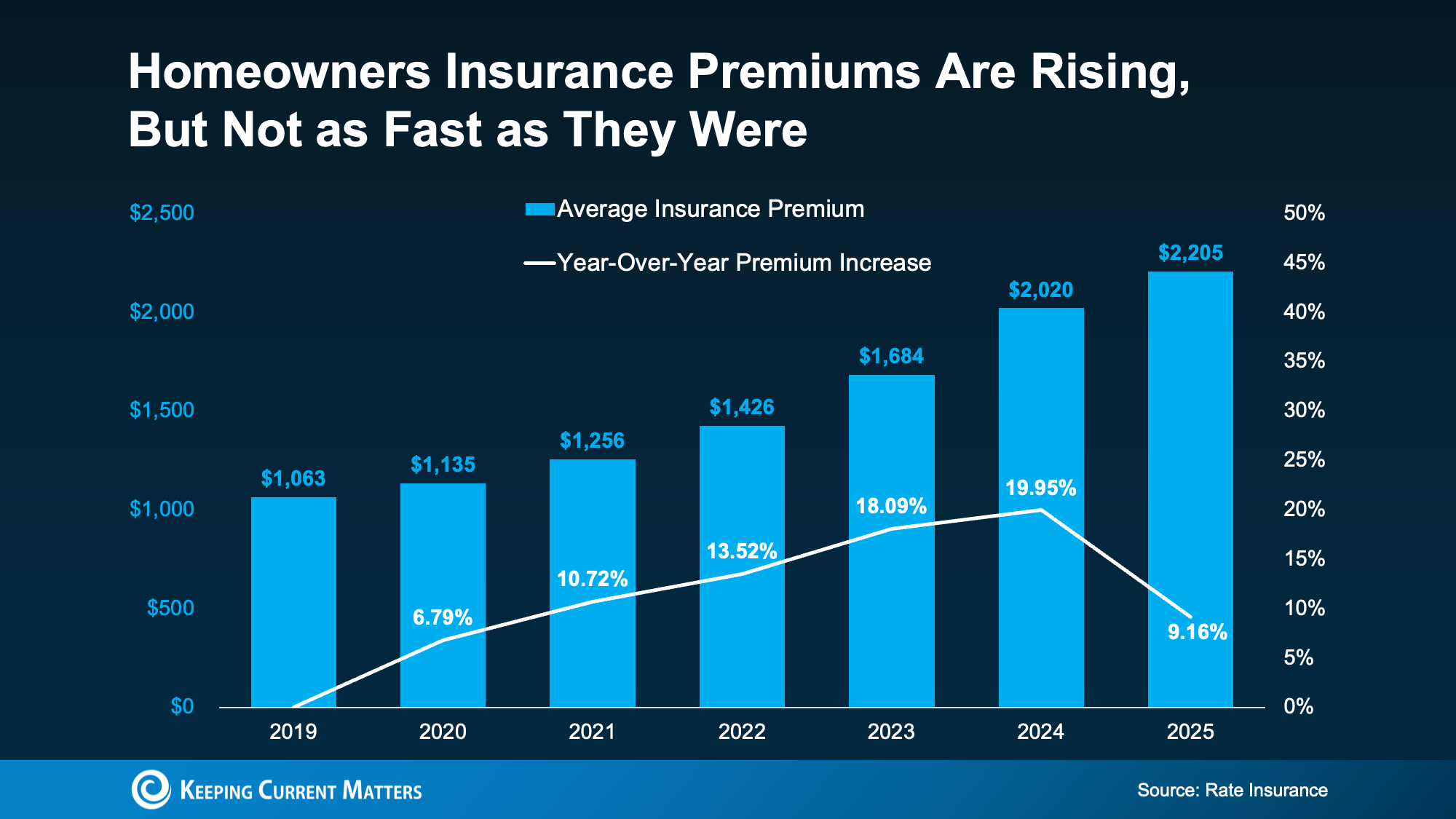
Nearly 20% annual increases
Premium growth was especially steep during the two years before the slowdown.
9.16% annual increase
Still higher—not cheaper—but a slower climb and a possible early sign that the rate cycle is beginning to stabilize.
That does not mean premiums are getting cheaper. It means the sharp climb of the last several years may finally be leveling off.
“Small shift. Real shift. Worth knowing before you budget your next offer.”
Pat Collins
What the headlines always leave out.
Insurance is not one national number. It is local—down to your state, ZIP code, home, roof, claims history, replacement cost, coverage limits, deductible, and the insurer willing to write the policy.
Forbes Advisor’s state-by-state comparison shows just how widely average premiums can vary depending on where you buy. Natural-disaster exposure, rebuilding costs, crime, local claim patterns, and the characteristics of the property can all affect the quote.
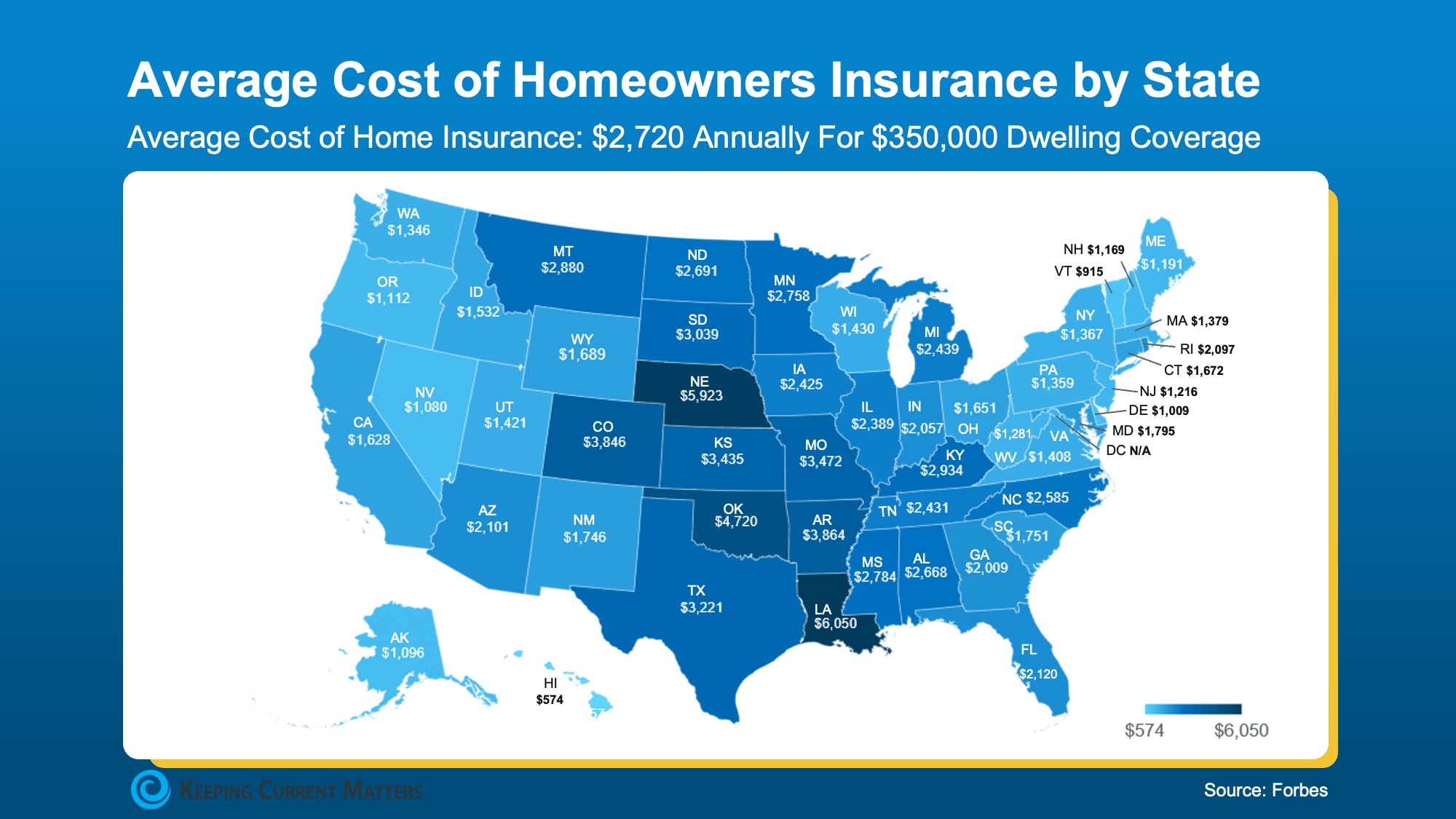
This is why I tell every couple I work with: get your own quote. Do not budget off a national average and hope it holds up in your ZIP code.
The Consumer Financial Protection Bureau recommends contacting several companies, getting quotes in writing, and comparing both cost and coverage. Your lender will generally require proof of homeowners insurance before funding the loan, so the question is not whether you will need it. The question is whether you price it early enough to protect your plan.
Ask an insurance professional to quote the actual property whenever possible. A home can look affordable on the listing page and become much tighter after the property-specific insurance premium is added.
Insurance eligibility can also affect whether a home is truly a good opportunity. That is one reason I tell buyers to investigate property condition, roof age, prior claims, and insurability before calling a listing a bargain. I cover that larger offer strategy in How To Find the Best Deal Possible on a Home Right Now.
What this means for your plan.
Here is where this stops being a headline and starts becoming math you can actually use.
Insurance is part of PITI
PITI stands for principal, interest, taxes, and insurance. Those four pieces help form the full monthly housing payment used in real-world budgeting and mortgage analysis.
Under Rule 9 in our system, your total housing payment—all four pieces—should stay near 30% of your gross household income. If you are only running the numbers on principal and interest, you are underestimating the real payment.
I have watched couples get pre-approved, skip this step, and get surprised later. Do not be that couple.
Insurance also lives inside the Big 7
Under Rule 2, housing is one of the seven essential household categories that should collectively stay under 35% of take-home pay. Insurance is not a “figure it out later” cost. It is baked into that ceiling from day one.
So before you make an offer, get a real quote—not a loose estimate. Use a quote tied to the actual home and ZIP code whenever possible. That number goes straight into your PITI and Big 7 math.
Include principal, interest, property taxes, homeowners insurance, mortgage insurance when applicable, and homeowners association dues when applicable.
Taxes and insurance can change the comfortable price range. Use the actual property information rather than relying only on an early pre-approval estimate.
Car loans, credit cards, personal loans, and other monthly obligations also compete for room in the budget. See how those payments can quietly reduce homebuying power.
Do not use every available dollar to reach the closing table. Insurance deductibles, maintenance, repairs, and premium changes still exist after you receive the keys.
Know the number you will actually live with after closing.
I can help you compare the purchase price, down payment, estimated taxes, insurance, mortgage insurance, debts, and cash needed so the payment makes sense before you make an offer.
Talk With PatOnce you have the quote, you are not necessarily stuck with it.
Insurify and NerdWallet point to several practical moves that may help lower a homeowners insurance premium. Savings, eligibility, and available discounts vary by insurer and state, so compare the total coverage—not just the lowest price.
Get comparable written quotes from more than one company. The spread between insurers can be larger than many buyers expect.
One carrier and multiple policies may produce a multi-policy discount, but compare the bundled total against separate policies before deciding.
Do not assume every discount was automatically applied. Ask about claims-free history, security devices, payment method, recent purchase, renovations, and other qualifications.
A newer roof, updated plumbing or electrical systems, storm-resistant materials, alarms, and other improvements may affect eligibility or premium discounts.
In many states, insurers may use a credit-based insurance score when pricing coverage. The rules and effect depend on the state where the property is located.
None of this is complicated. It just has to happen before the offer and before closing—not after the payment has already surprised you.
The question you should be asking together right now.
Not only: “How much is our mortgage payment going to be?”
The better question is: What is our full monthly housing number—principal, interest, taxes, and insurance—and does it still fit inside our Big 7?
My wife and I have been on both sides of this table for 34 years—as a couple building our own life, and as professionals guiding other couples through theirs.
The couples who avoid the surprise at closing are not the lucky ones. They are the ones who priced the whole payment before they ever wrote an offer.
Get the insurance quote early. Run it through your numbers. Have the conversation with your spouse before the number shows up on a closing disclosure instead of a budget spreadsheet.
That is the difference between being surprised by your house and being in control of it.
Bottom line
Rates and prices matter. So does the down payment.
But the home is not affordable because the principal-and-interest payment fits. It is affordable when the complete housing payment fits your income, your Big 7, your reserves, and the life you want after closing.
Homeowners insurance costs are still elevated, even though the latest data shows the pace of increases may be slowing. Your quote can still vary significantly by property and location.
Price it early. Compare coverage. Put the real premium into the math. Then decide whether the home still works.
Pat Collins
Financial Coach | Mortgage Professional | Realtor
34 Years of Marriage and Real Estate — I have been on both sides of every table.
Educational disclosure: This article is for general educational purposes and is not individualized mortgage, financial, insurance, legal, tax, credit, or real estate advice. Insurance availability, underwriting, pricing, discounts, exclusions, deductibles, and the use of credit-related information vary by insurer, property, state, and individual circumstances. Mortgage qualification and housing-expense calculations vary by loan program and underwriting requirements. Consult qualified mortgage, insurance, real estate, tax, legal, and financial professionals regarding your situation.
Reference sources: Pew Research Center, Rate Insurance’s 2026 Home Insurance Trends Report announcement, Forbes Advisor, Consumer Financial Protection Bureau, Insurify, and NerdWallet.