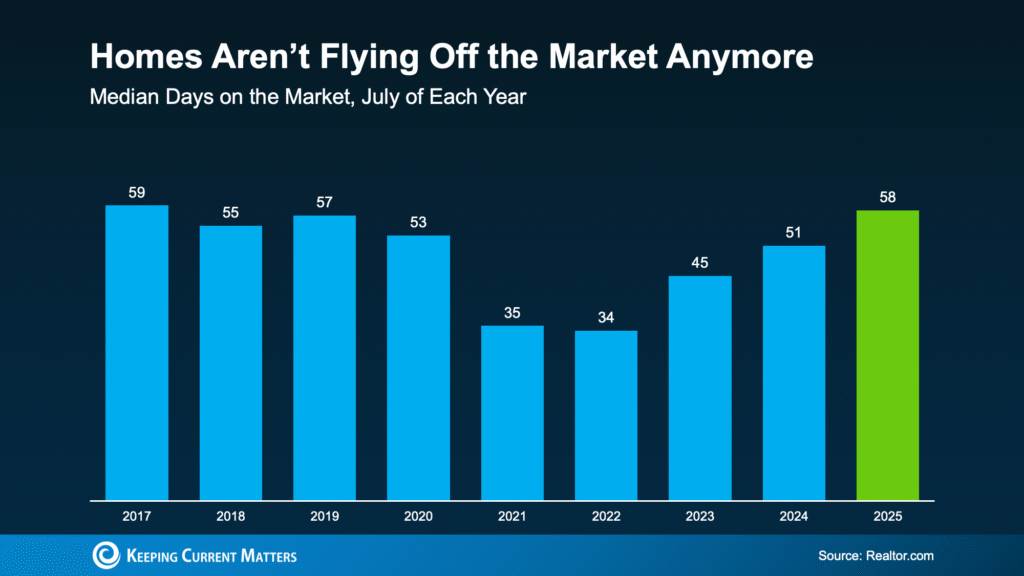


If the speed of the housing market made you step back a few years ago, take another look. Buyers now have something that was almost impossible to find during the pandemic housing rush: time.
Time to tour a home more than once. Time to compare it with other listings. Time to read the disclosures, complete inspections, review the payment, and decide whether the house actually fits your life.
That does not mean every home will sit on the market or every seller will accept a discount. Well-priced homes in desirable neighborhoods can still move quickly. But the national pace is much closer to normal, and that can create a healthier decision-making environment for prepared buyers.
A slower market gives you breathing room—not permission to become unprepared. The buyers who benefit most are financially ready before the right home appears.
The market has shifted back toward a more normal pace
According to Realtor.com’s June 2026 housing report, the typical home spent 53 days on the market. That matched June of the previous year and was also in line with the pre-pandemic norm.
The same report showed more than 1.1 million active listings nationwide, while the median listing price was down 2.5% from a year earlier. Those numbers do not automatically make every city a buyer’s market. But they do show that buyers generally have more inventory and less pressure than they faced at the market’s peak.
The goal is not to move slowly. The goal is to use the available time to move intelligently.
Pat Collins
During the fastest part of the pandemic market, some buyers had hours—not days—to decide. They waived protections, stretched budgets, and made offers based on fear of missing out. Today’s pace gives more buyers a chance to replace emotion with information.
What more time can mean for you
Extra days on the market can improve the buying process in several practical ways.
1. You can compare the house—not just react to it
When homes sell immediately, buyers start treating every listing like it is the last available house. A slower pace allows you to compare price, condition, location, taxes, insurance, commute, schools, maintenance, and resale potential.
2. You can complete real due diligence
An inspection is not just a formality. It can reveal roof, plumbing, electrical, foundation, drainage, HVAC, moisture, and safety issues. More time gives you room to understand the report, gather estimates, and decide which problems are acceptable.
3. You can review the complete monthly cost
The mortgage payment is only one part of ownership. Property taxes, homeowners insurance, mortgage insurance, HOA dues, utilities, repairs, and maintenance all affect affordability. A little breathing room makes it easier to evaluate the entire payment instead of focusing only on the purchase price.
4. You can make a decision without letting fear make it for you
Urgency and panic are not the same thing. You should still respond quickly when the right opportunity appears. But a good decision should be based on your numbers, your priorities, and the condition of the home—not simply on what another buyer might do.

A slower pace can create leverage—but not automatically
The longer a property sits, the more likely a seller may become open to a reasonable conversation. Depending on the home and local market, that conversation could include:
- A lower purchase price
- Seller-paid closing costs
- A temporary or permanent mortgage-rate buydown
- Repairs or credits based on the inspection
- Included appliances or other personal property
- A closing date that better fits your move
React first
Limited time, fewer comparisons, multiple offers, reduced negotiating room, and more pressure to waive protections.
Evaluate first
More time for inspections, payment analysis, seller conversations, and an offer based on facts instead of panic.
But leverage depends on the listing. A house that is new to the market, priced correctly, and located in a highly desirable area may still attract multiple offers. A home that has been listed for several weeks, needs repairs, or has already reduced its price may give you more room.
This is where strategy matters. The question is not, “Can I ask for something?” You can always ask. The better question is, “What request is supported by the condition of the home, comparable sales, days on market, and the seller’s situation?”
Your local market sets the real clock
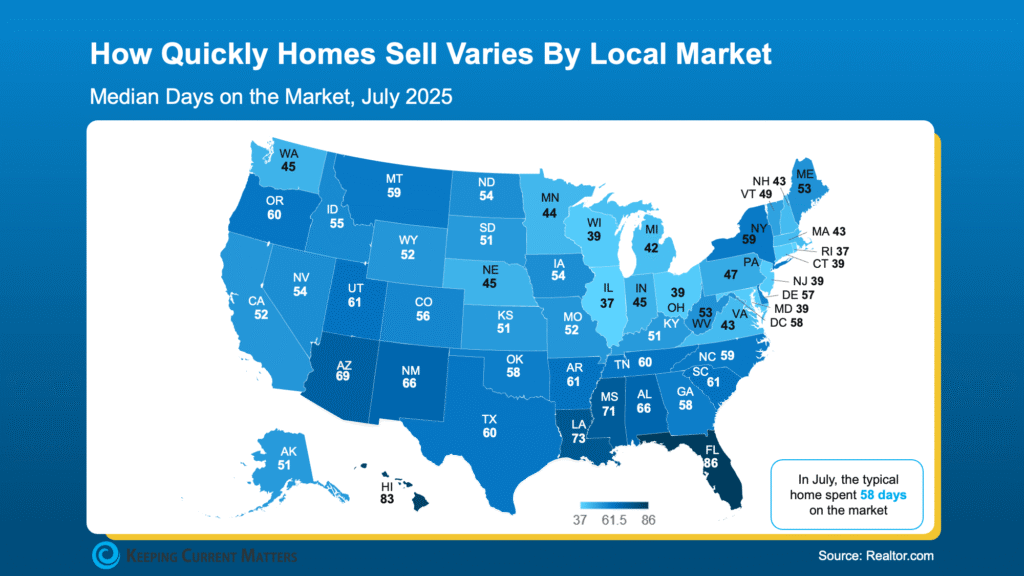
National numbers are useful, but they are averages. They combine fast-moving markets, slower markets, starter homes, luxury properties, condos, rural areas, and major cities.
Realtor.com reported that homes in the hottest June 2026 markets sold in a median of about 31 days—more than three weeks faster than the national norm. That is a reminder that your city, price range, and neighborhood may move very differently from the national headline.
Even within one county, the pace may change block by block. A turnkey starter home near good schools may sell quickly. A larger home at a higher price point may sit longer. A condo with a high HOA payment may face different demand than a detached home nearby.
Before writing an offer, ask how long comparable homes are taking to sell, how often sellers are reducing prices, and what concessions are actually being accepted.
How to use the extra time wisely
More time becomes an advantage only when you have a plan. Here is the order I recommend:
Know your loan options, estimated cash needed, and comfortable monthly payment before emotion enters the picture.
Interest rate, taxes, insurance, HOA dues, and mortgage insurance can make two similarly priced homes feel very different each month.
Review days on market, price reductions, comparable sales, and recent seller concessions in the exact area and price range you are targeting.
Use the available time to understand the property, future maintenance, insurance considerations, traffic, noise, commute, and nearby development.
Build the offer around market data and the home’s condition. A fair, well-supported request is stronger than an aggressive number with no explanation.
Do not confuse having more time with having unlimited time. The best homes can still move quickly. Preparation lets you act promptly without feeling rushed because the important financial decisions were made before you found the house.
Let’s build your homebuying plan before the right house appears.
We can review your payment range, cash needed, debt-to-income ratio, and loan options so you know when to move quickly—and when to walk away.
Talk With PatBottom line
Buyers finally have more breathing room than they did during the housing frenzy. Homes are taking longer to sell, inventory is more available, and some sellers are more willing to negotiate.
That does not mean you should wait forever or assume every seller is desperate. It means you may have a better opportunity to slow down just enough to inspect the home, understand the payment, negotiate intelligently, and make a decision you can live with.
More time does not guarantee the perfect deal. But used correctly, it can help you make a better one.
This article is for educational purposes only and is not a commitment to lend. Loan qualification, available programs, rates, payments, and terms depend on the borrower’s complete financial profile, property, credit, income, assets, and underwriting approval. Programs and market conditions may change without notice.